The title The Dust Eater derives from a comic-wbook figure: a woman with demonic blood who, upon activating her power, vibrates her body in all directions—360 degrees, save for her feet—acquiring a stereoscopic, all-encompassing perception. She is able to registersignals from every direction, anticipating and deflecting incoming threats. And yet, her face remains pressed to the ground. It is from this posture that she is named: the Dust Eater.
To occupy the lowest position while possessing the most expansive perception—this paradox forms the central metaphor of the exhibition. It suggests a mode of seeing that adheres to the surface of matter, or even sinks into it: not a gaze from above, but one mediated by thebody, assembling knowledge through fragments, residues, andneglected remains. Under conditions of dense information and extended temporal spans, such a position may give rise to propositions that exceed immediate visibility.
With an almost indiscriminate intensity, the works circle around a rewritten language of nature. Whether in the dismantled and recomposed artificial “rocks,” the plants growing within a space suspended between greenhouse and cinematic narrative, or the images extracted and reprocessed from video games, nature no longer appears as an original or coherent whole. Instead, it persists as fragments, substitutes, and reproductions. This estrangement is not incidental; it signals a conscious attempt to break from states of passive conditioning, even as instinct continues to bind us to them.
The artist repeatedly engages with what already exists: industrial climbing holds, 1990s video game environments, historical ornamental motifs, even broken remnants generated in the process of making.
These elements are not simply cited, but translated, dismantled, and reassembled across contexts and media. Images move from digital to sculptural form and back again; nature shifts from material presence to model, becoming a raised and compressed interface.
In an era marked by the overproduction of images and matter, artistic practice no longer points toward endless generation, but toward the redistribution and reactivation of what is already available. Through the reuse of shared visual material, the works propose a form of “visual ecology.” In this sense, decline is not a defect but an adjustment—a negotiation toward the optimal allocation of resources.
The posture of the Dust Eater thus becomes critical. She searches along the ground, extracting information at the smallest scale. Information cocoons become her servants; her sensory system registers the atmosphere itself, where each gas leaves a distinct trace.
As the body lowers and vision is forced into proximity with detail and debris, another form of cognition begins to emerge—one that no longer depends on center or totality. The center dissolves into the periphery, giving way to a dispersed yet acute, almost holographic perceptual structure.
The Dust Eater is not only a figure, but also a desire for recognition. When historical totems—meander patterns or vegetal forms—and personal memory are translated into homogenized pixel structures, images enter the logic of reproducibility and acquire a renewed public dimension. From here, the exhibition unfolds as a sustained inquiry: in a world increasingly overlaid by media, where information continuously reshapes our present condition, what happens when vulnerability escapes regulation? At that moment, the relation between master and servant begins to invert—and what was once granted as recognition reveals itself, perhaps, as a flaw.
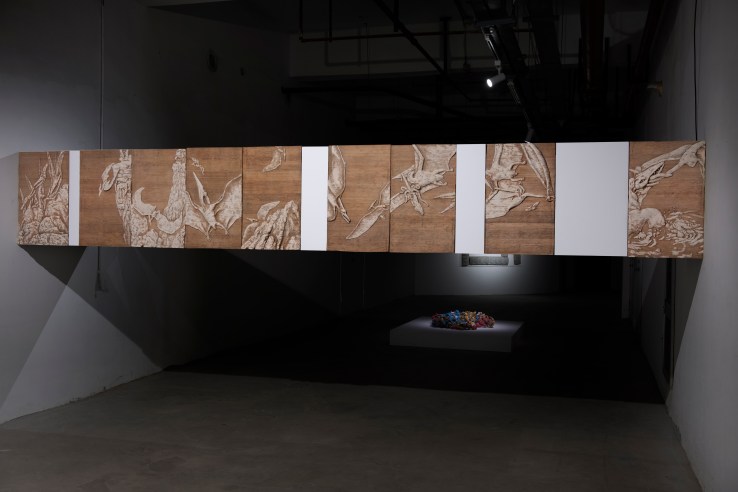
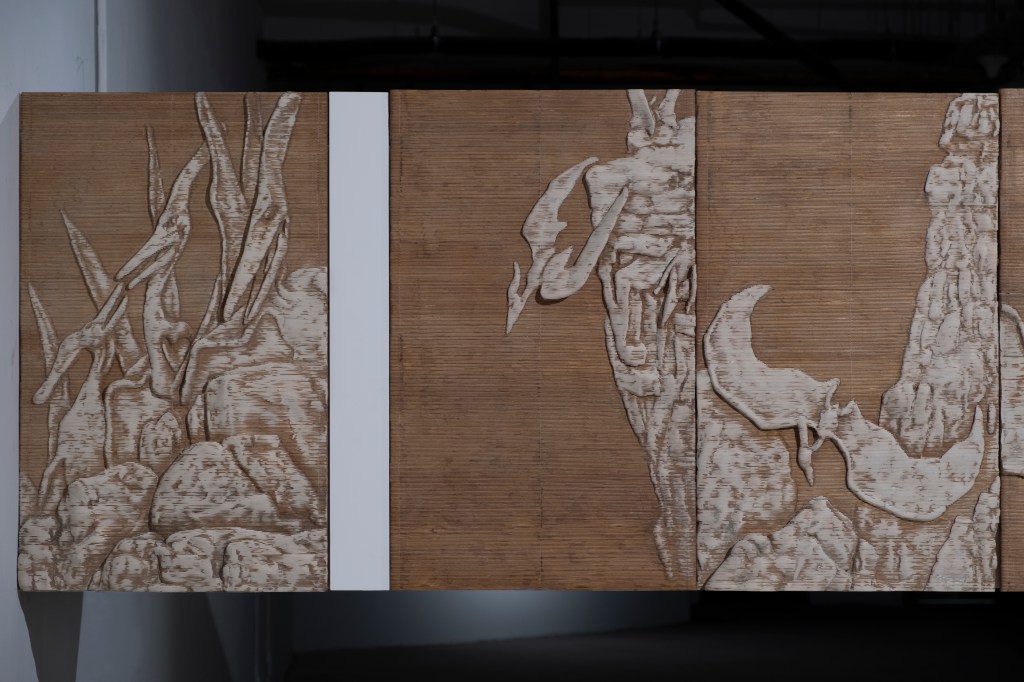
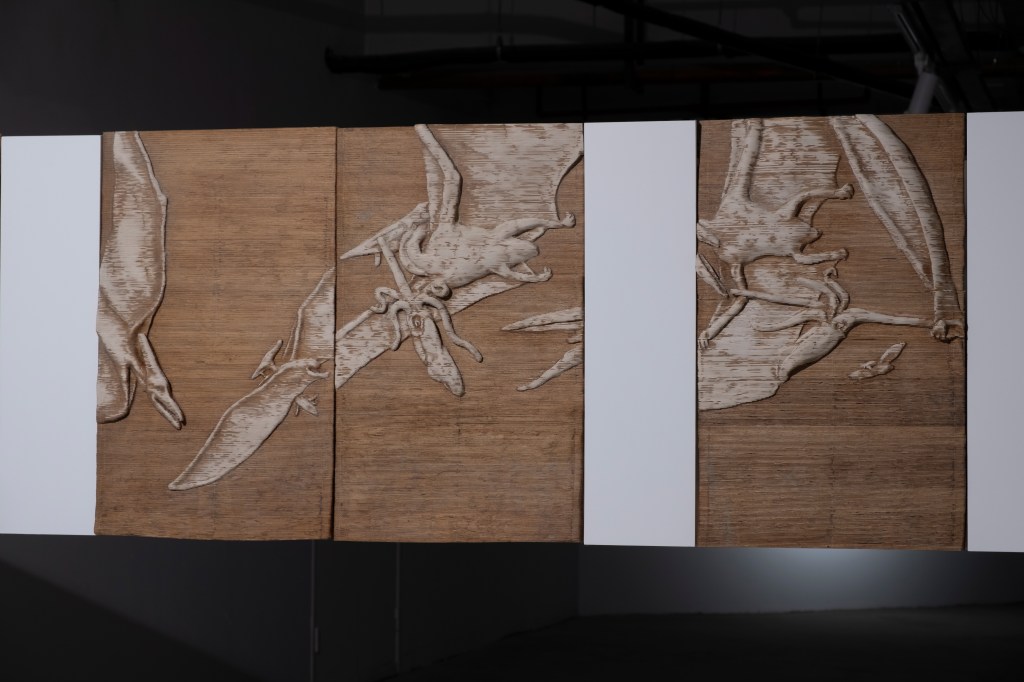
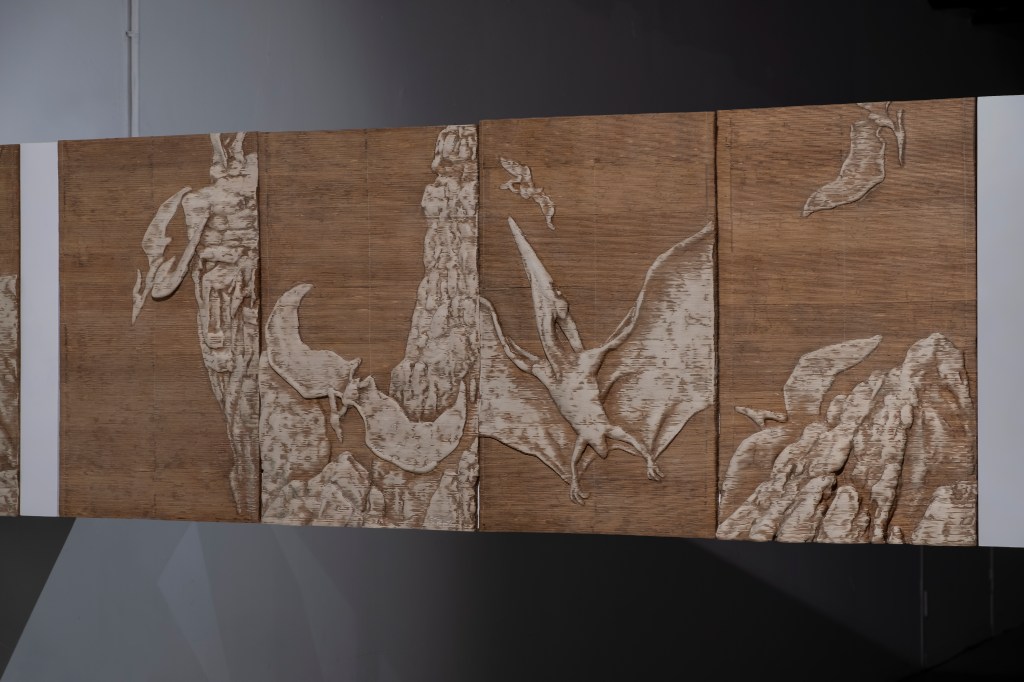
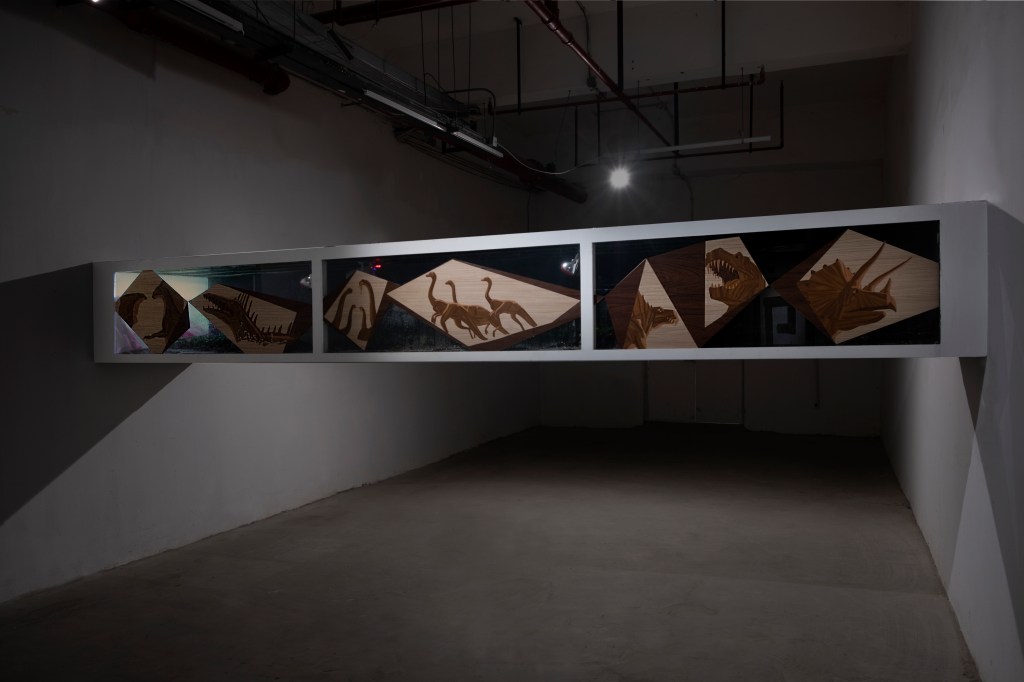
Cinema for Basil
2026
Mixed media, wood, various materials, multimedia
500 × 90 × 70 cm
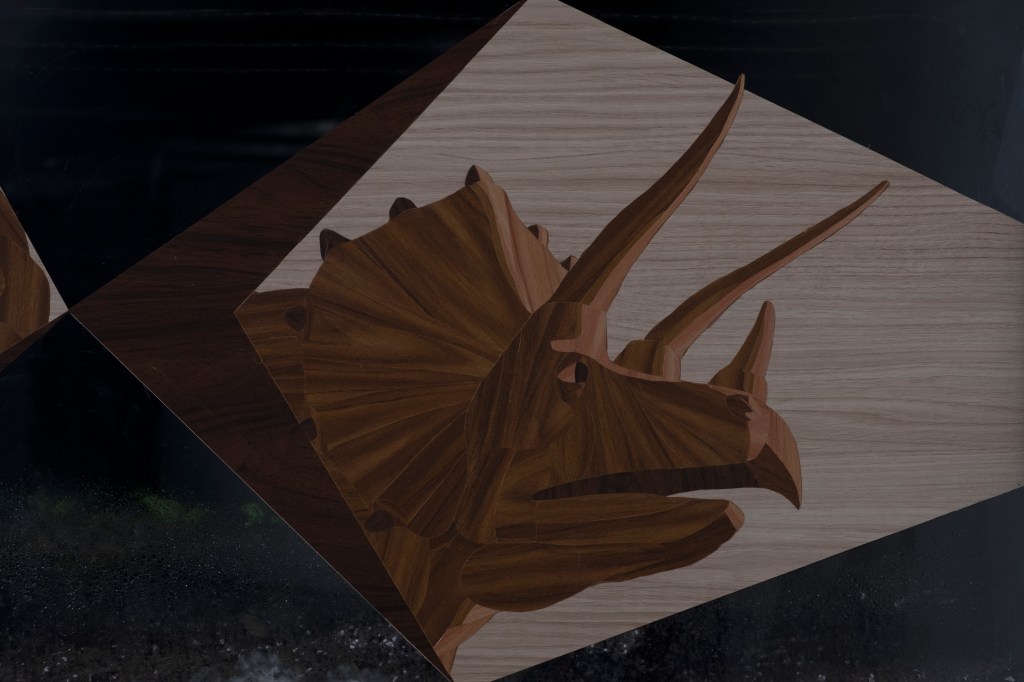
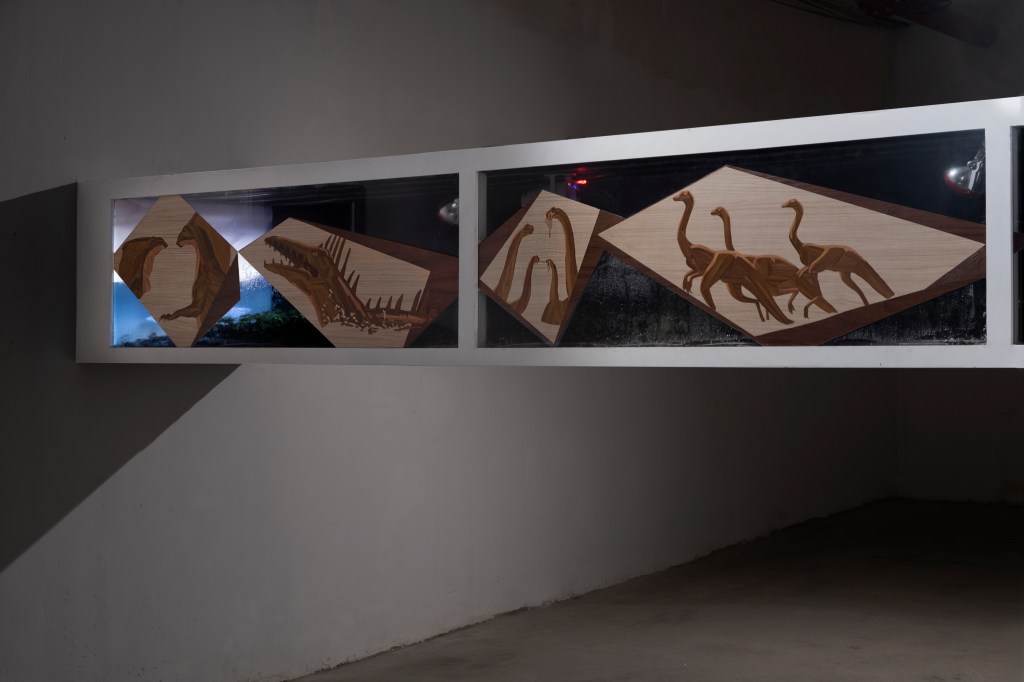
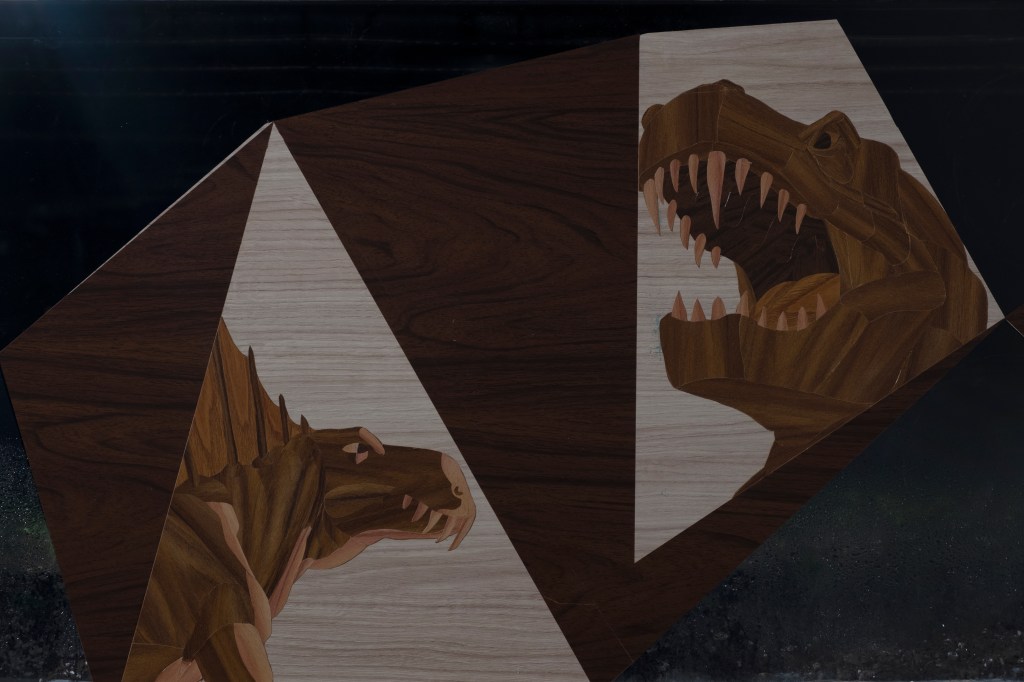
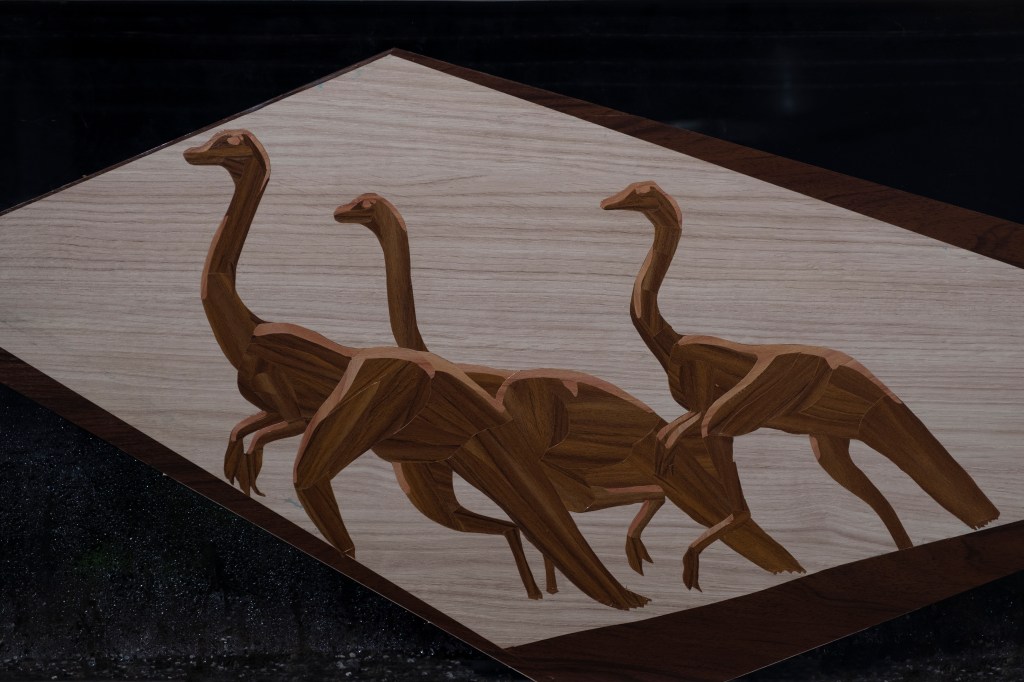
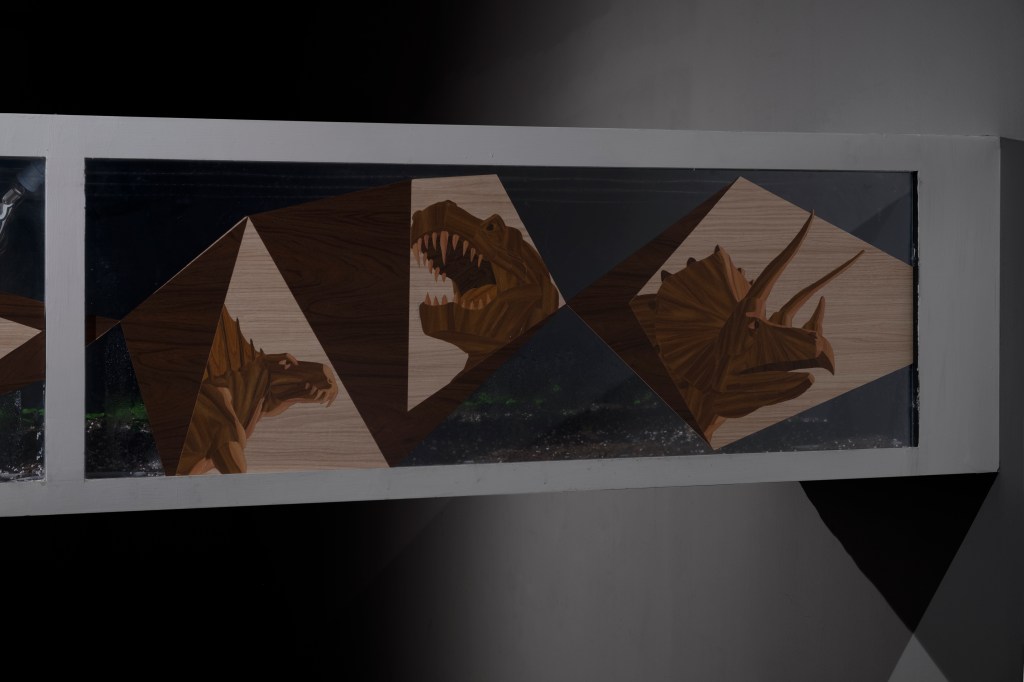
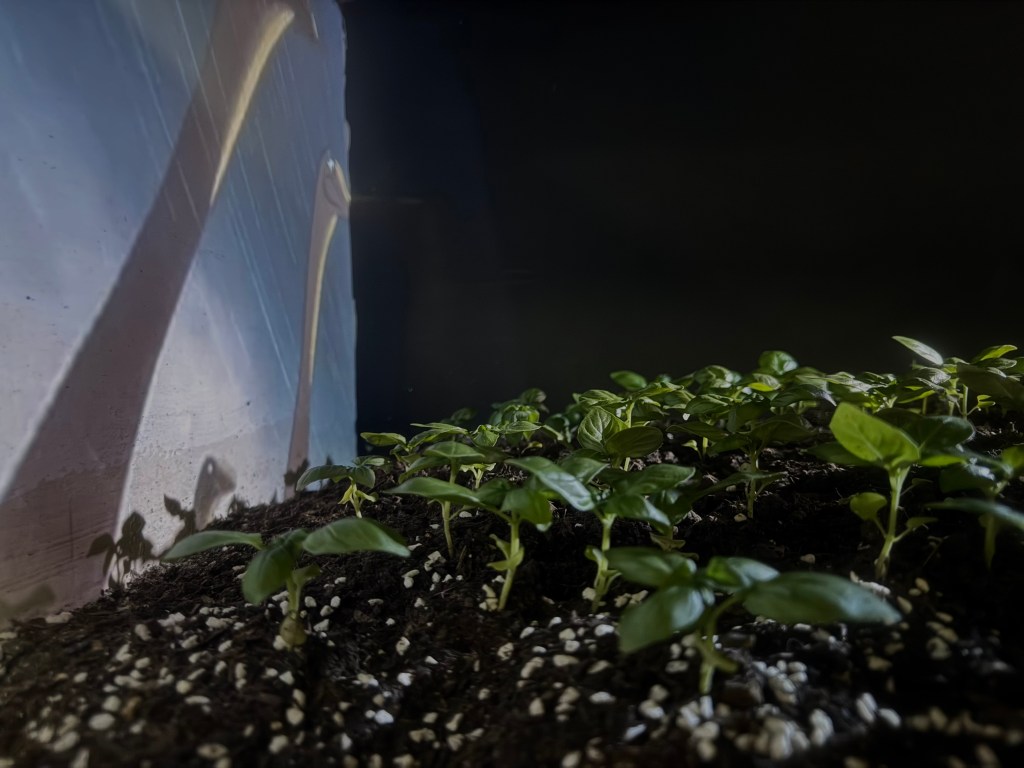
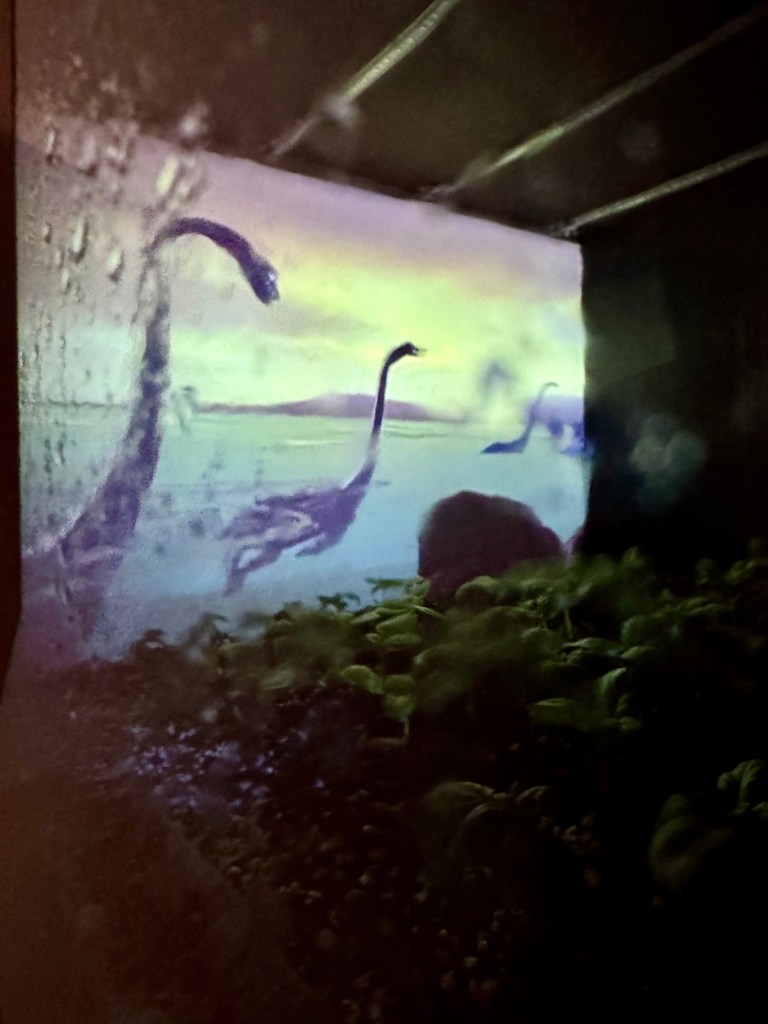
Cinema for Basili is a new version of a work already presented in othercontexts. The installation appears as a large block spanning the gallery wall to wall, with a front composed of nine laser-cut wooden panels depicting scenes of pterodactyls.
The project is inspired by Masaru Emoto’s rice experiment, which aimed to demonstrate that reality can be influenced or modified through the power of messages and intention. In the experiment, jars of rice were treated differently — one was spoken to with loving words, another with negative words, and a third ignored — resulting in the loving rice remaining white and healthy, while the rice exposed to negative words or neglect decayed and developed mold over time.
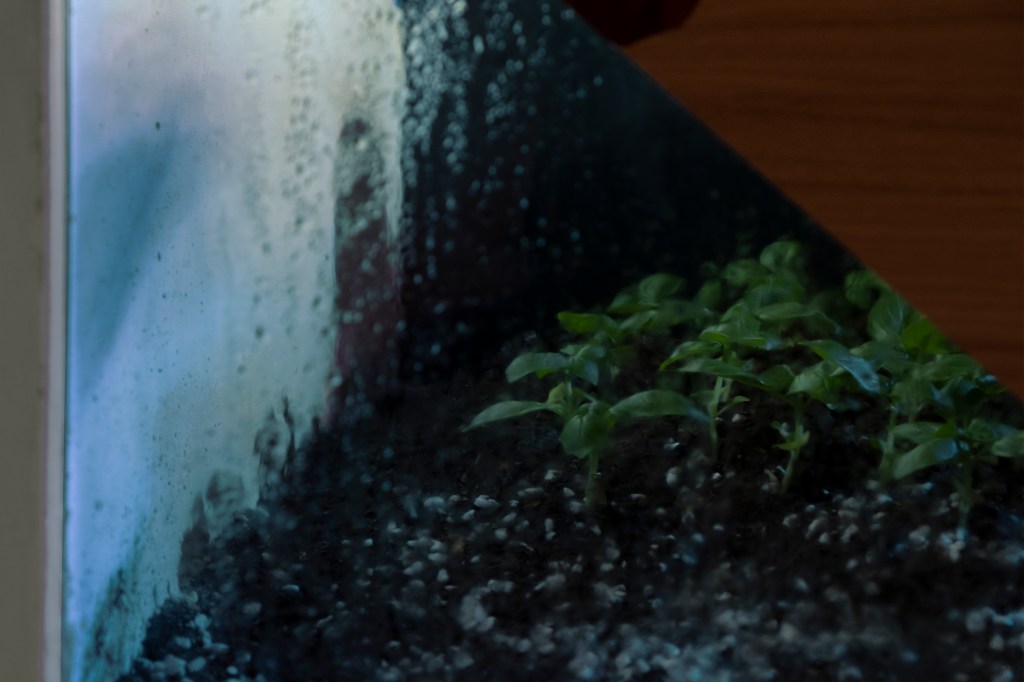
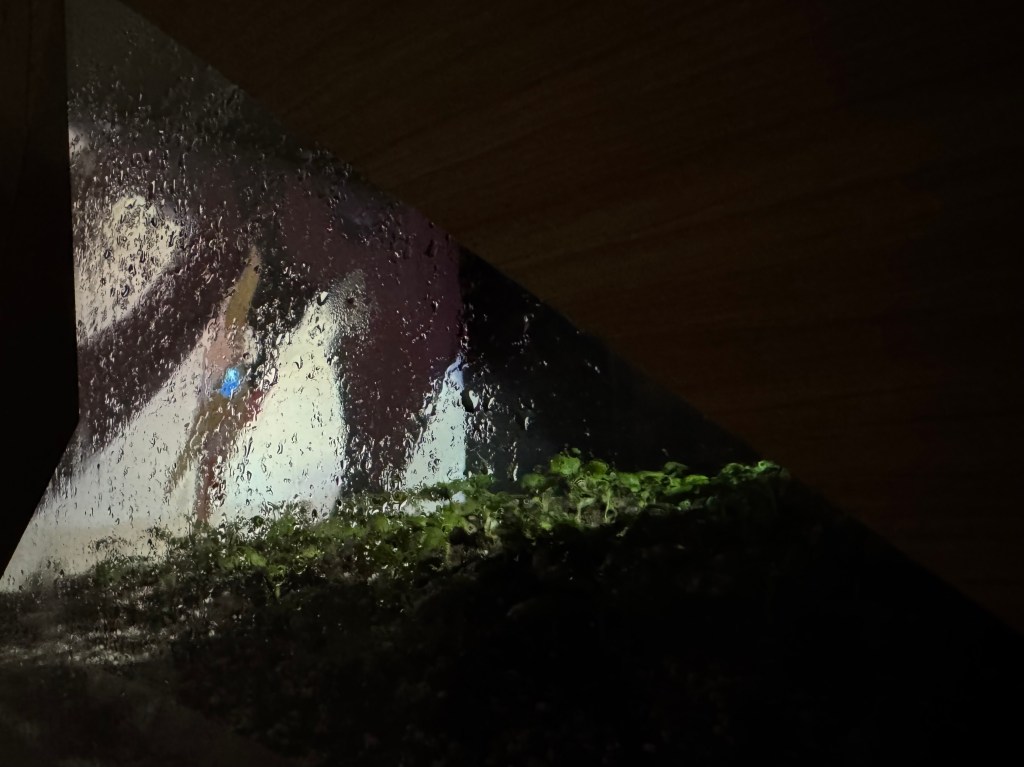
Taking this premise as a conceptual starting point, the work asks: what happens if, instead of inert rice, one applies this idea to basil seeds growing within the gallery while being exposed 24/7 to the “Rite of Spring” segment from Disney’s 1940 Fantasia, depicting the evolution of life, from early organisms to the struggle for survival among dinosaurs?
As visitors pass alongside the installation, they move through a five- meter-long greenhouse where the basil grows, absorbing and witnessing the continuous cinematic narrative. On the opposite side, a glass wall features hand-cut PVC inlays simulating wood, depicting dinosaur portraits from the animation, creating a customized, ornamental environment reminiscent of decorative cinema interiors.
Installation view
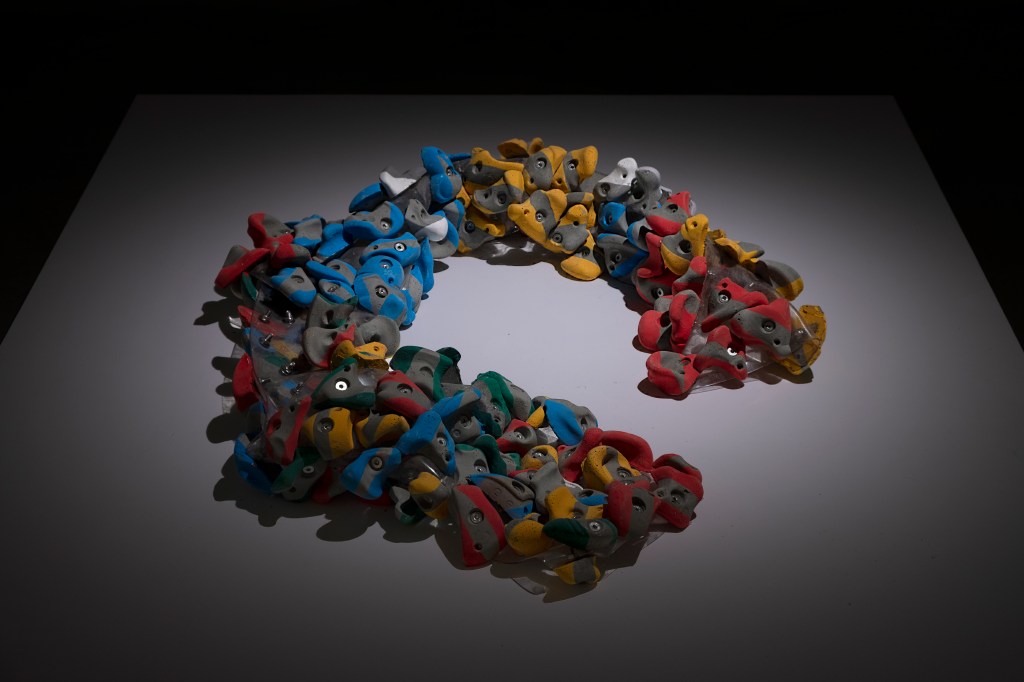
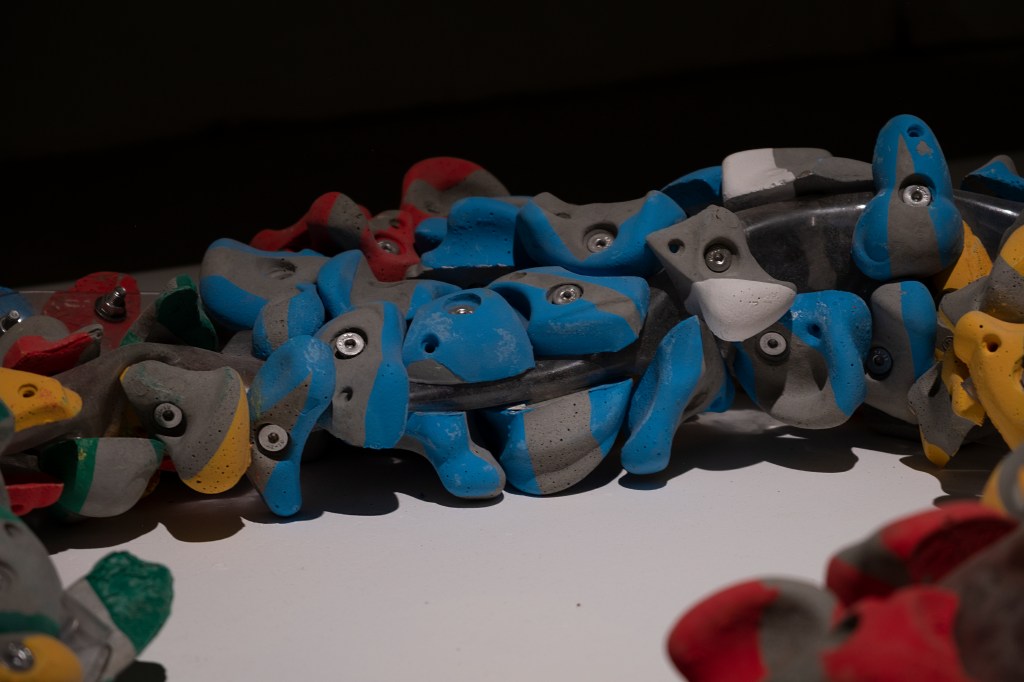
Rocaille G, 2026, Concrete, PVC, paint, metal, 210 × 50 cm
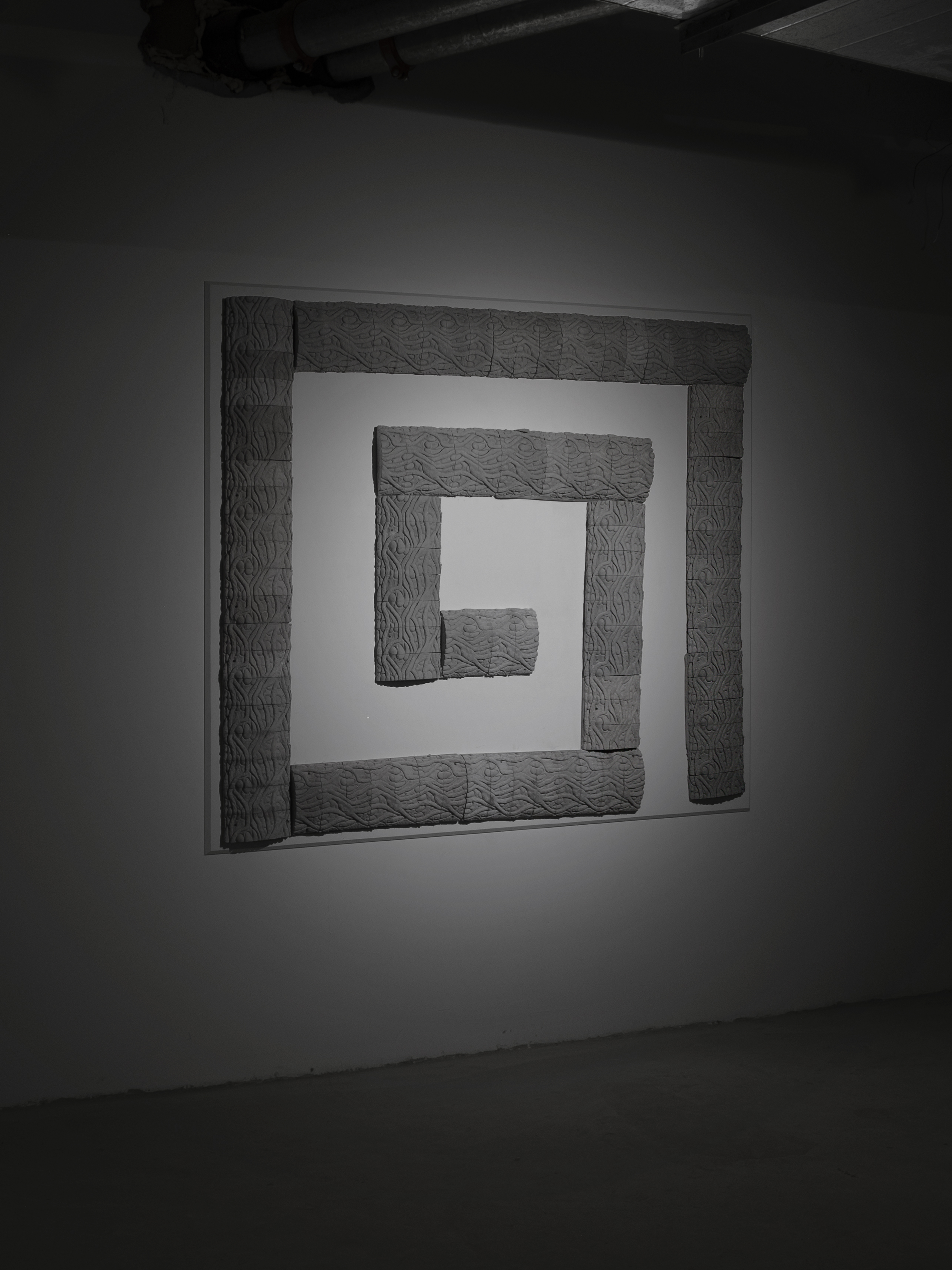
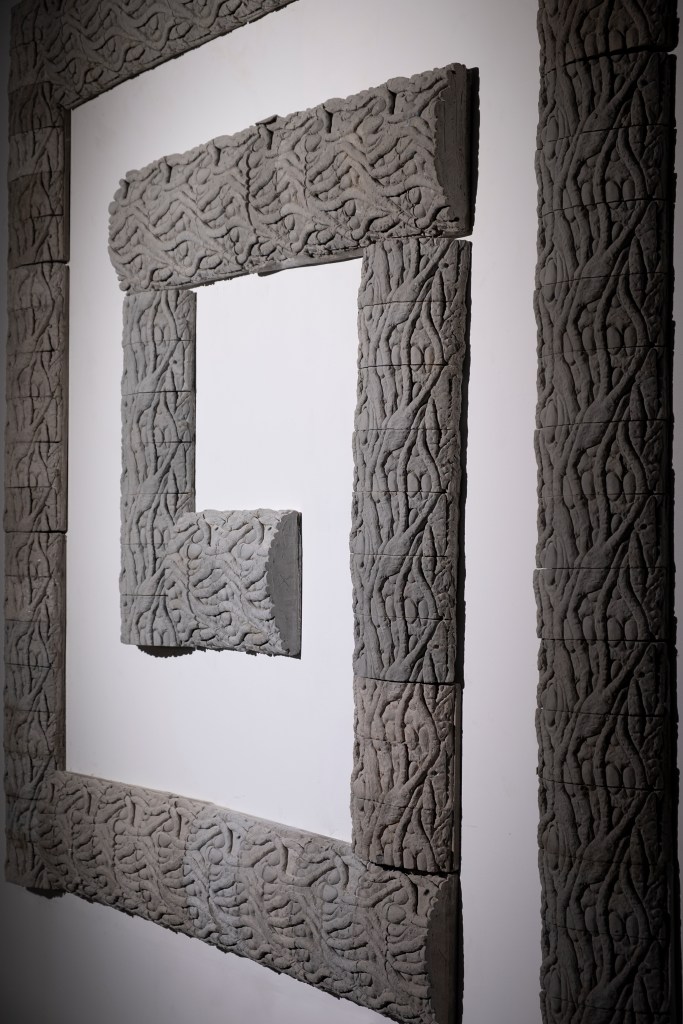
Natural Frieze
2026
concrete, 200 x 175 cm
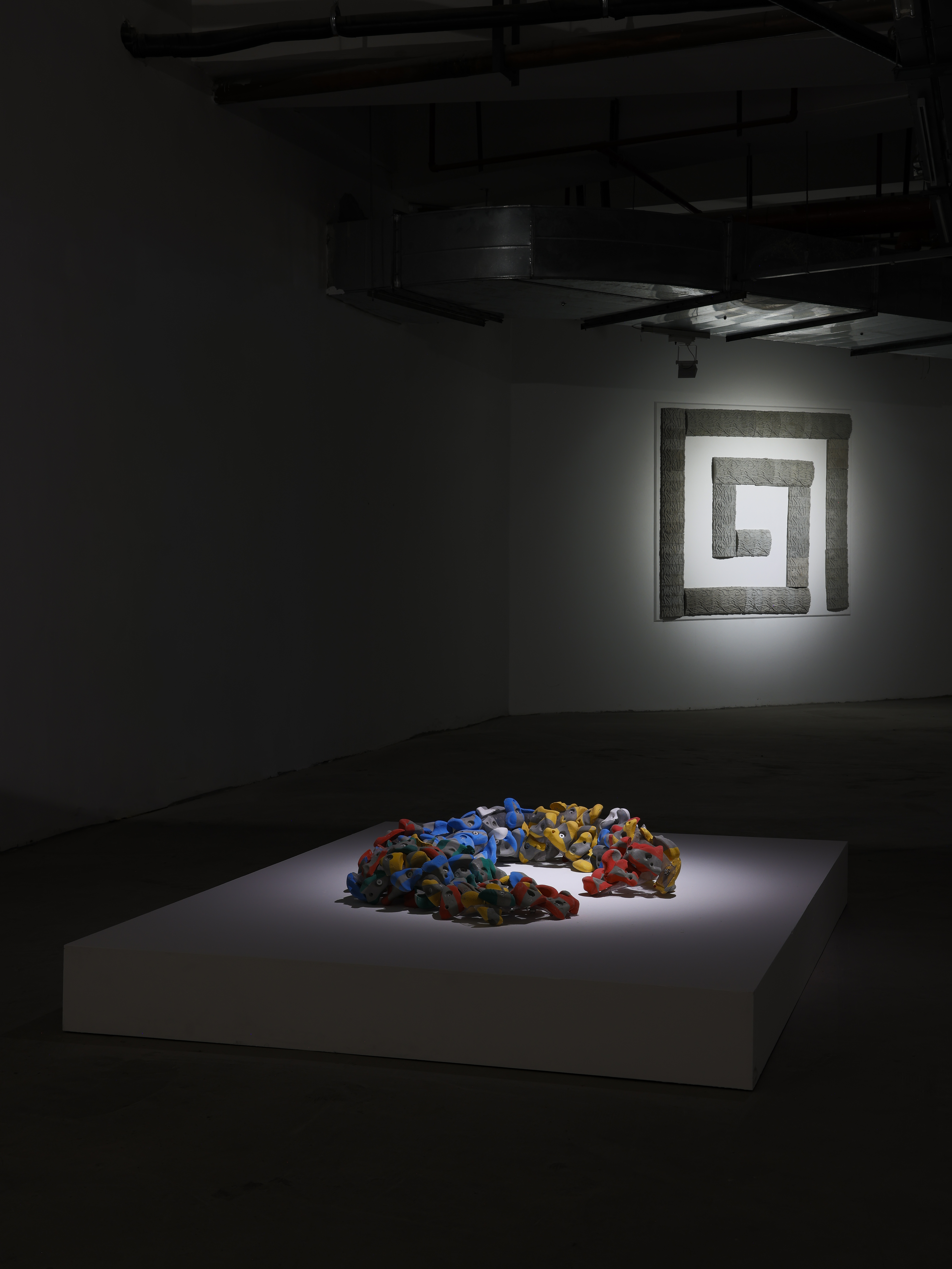
Natural Frieze is a composition reflecting on the concept of the meander motif present across cultures worldwide, from China to Greece, Africa to South America. This pattern can be seen as a unifying thread of ancient cultures and functions as a powerful symbol of the cyclicality of time, suggesting the recurrence of events throughout human history.
In this work, the inspiration comes from traditional Chinese Iconography, with a spiral motif transformed into a monumental frieze that can be imagined in architectural contexts. Unlike a conventional flat frieze, the piece introduces an additional layer of meaning: within the repeating meander, illustrative elements are embedded, creating a “double repetition.” These inserted motifs are drawn from human imaginaries related to nature
In Natural Frieze, the chosen imagery comes from the 1990s video game Wolfchild (1992, Core Design) and depicts a naturalistic, dystopian, alien-like tree. A semicircular sub-column of this tree motif repeats infinitely within the meander, reinforcing both the visual rhythm and the conceptual idea of recurrence. The result is a fusion of historical ornamentation, digital-age visual culture, and reflections on cyclical time
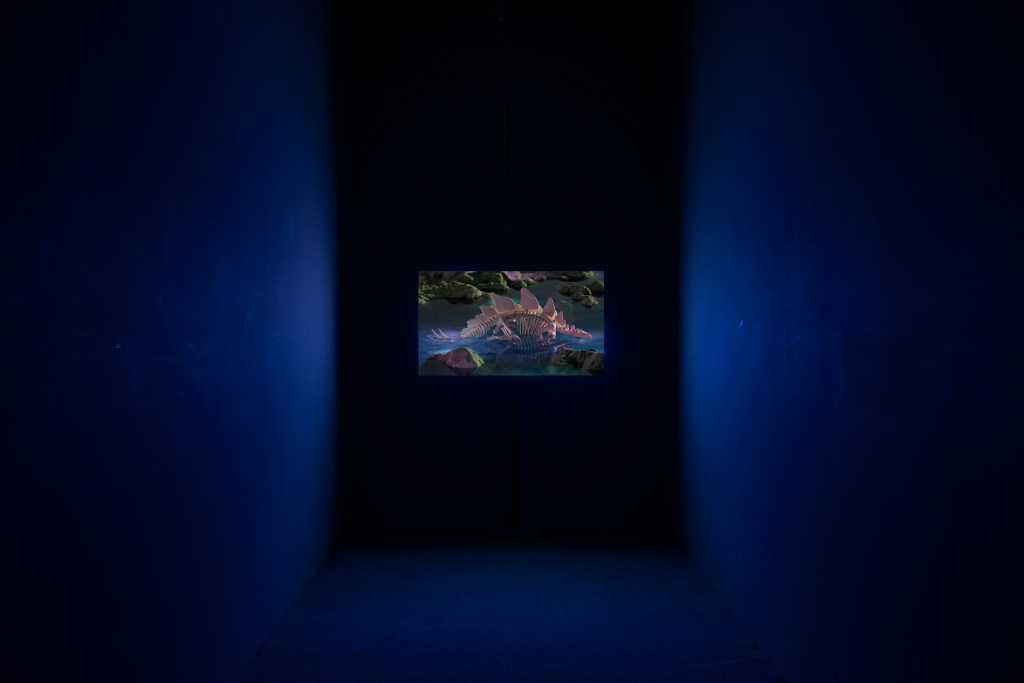
Landscape – in collaboration with Smoothponyboy, 2026, Full HD, 15 min loop
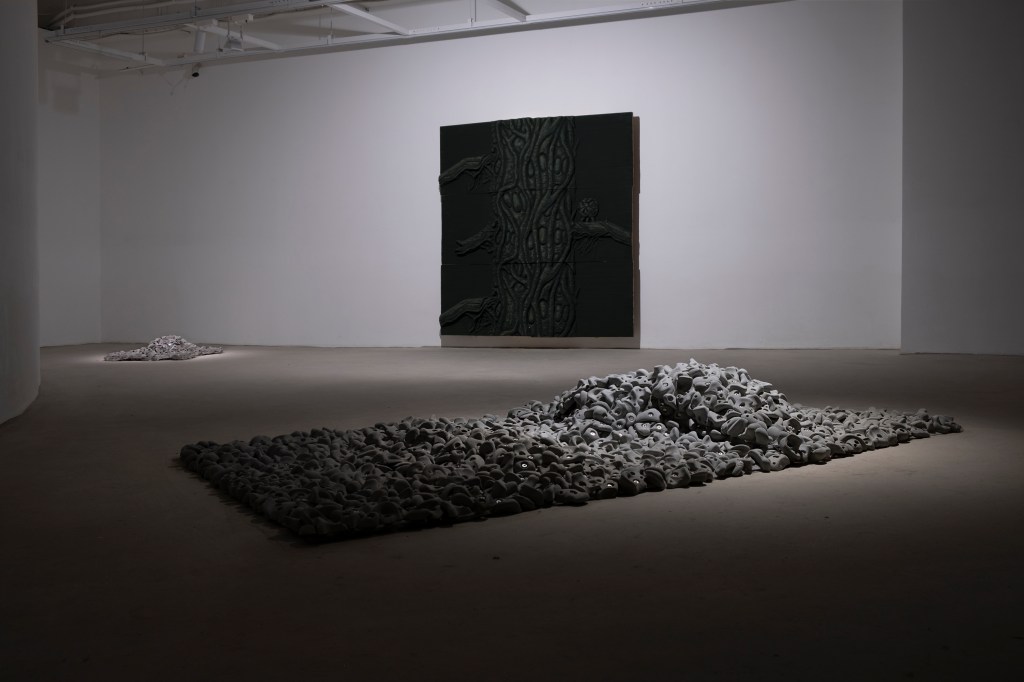
Installation view
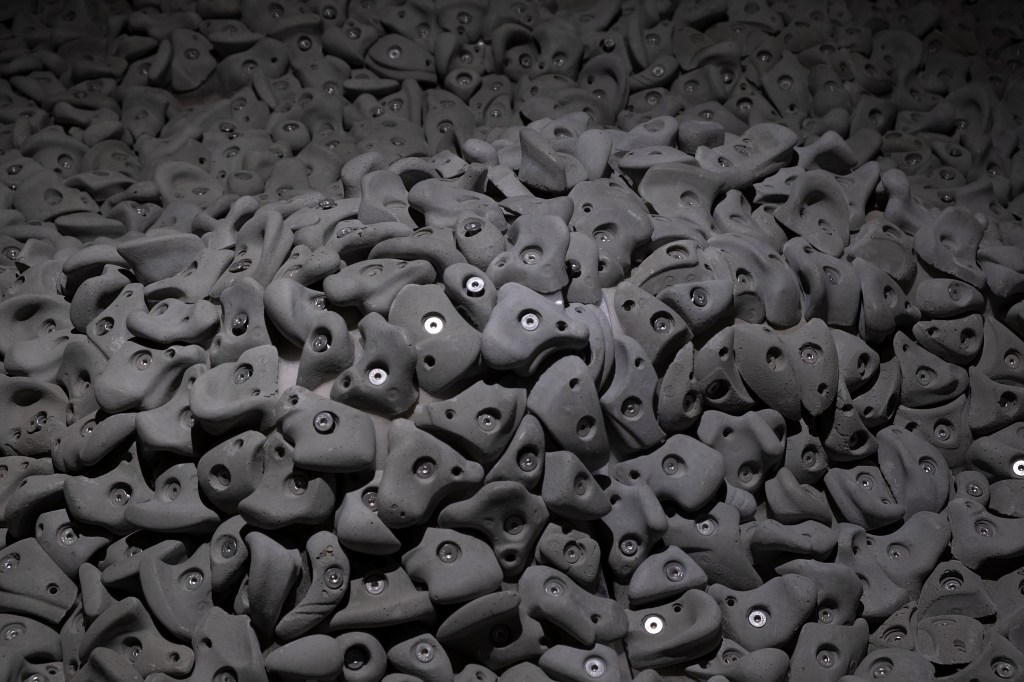
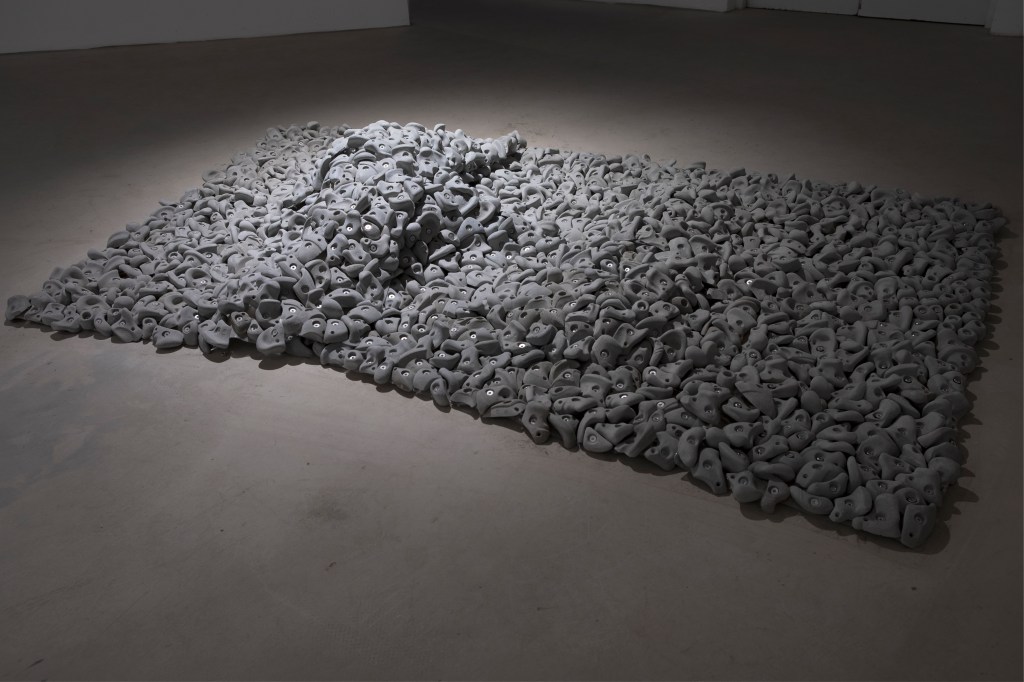
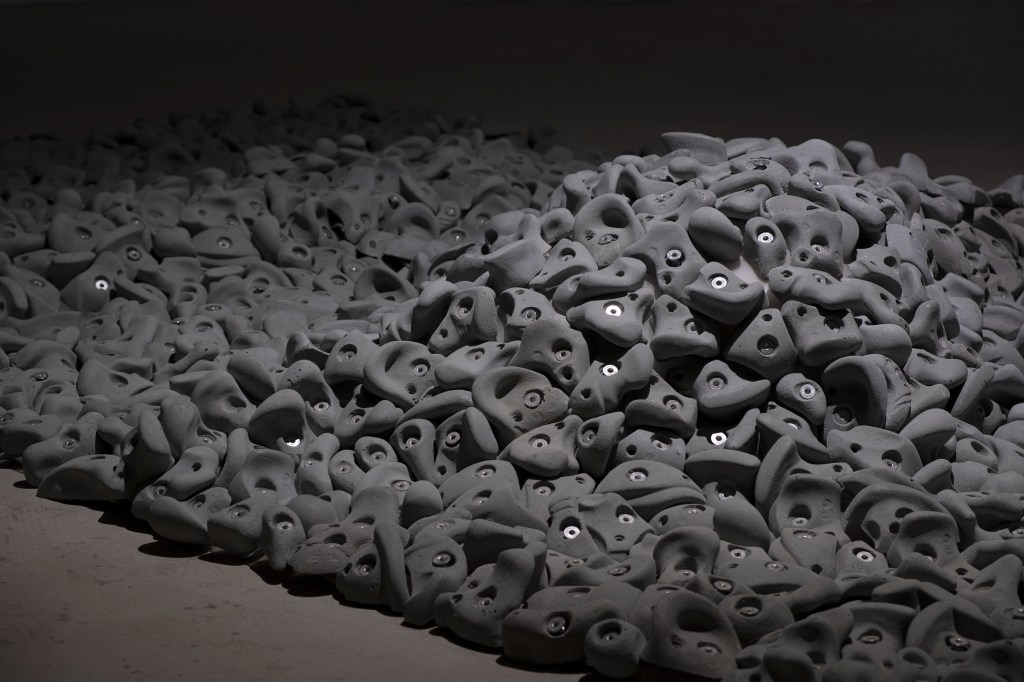
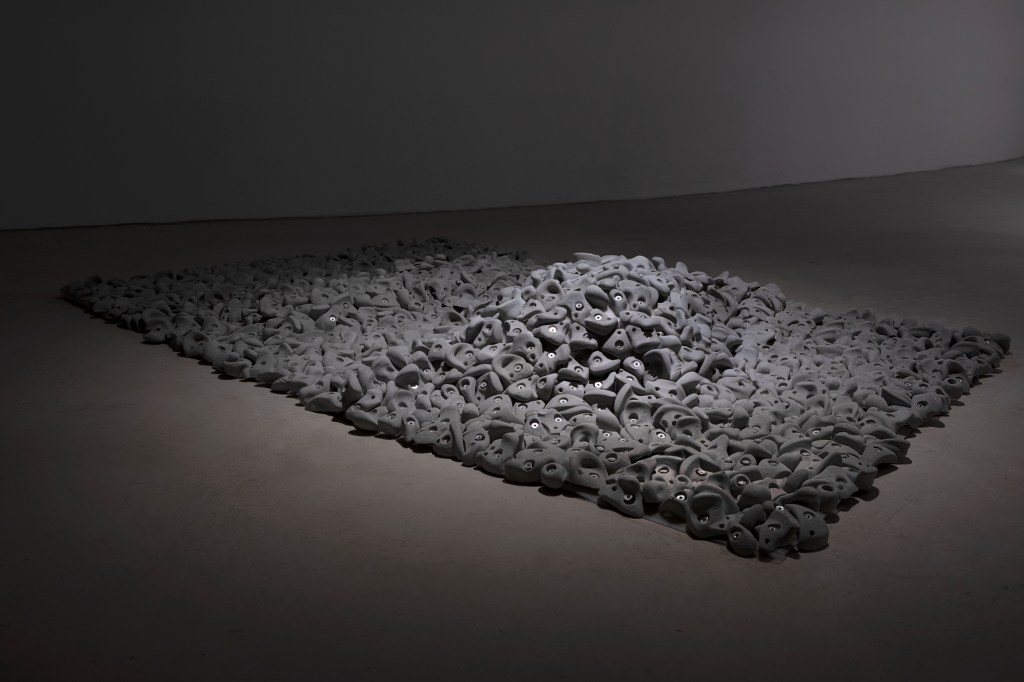
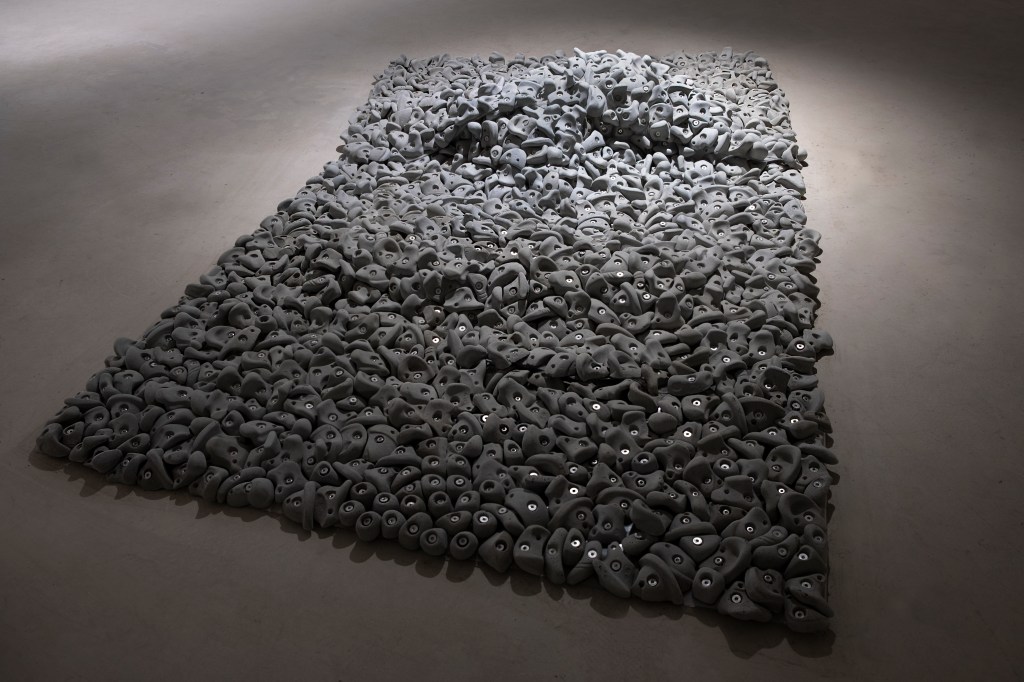
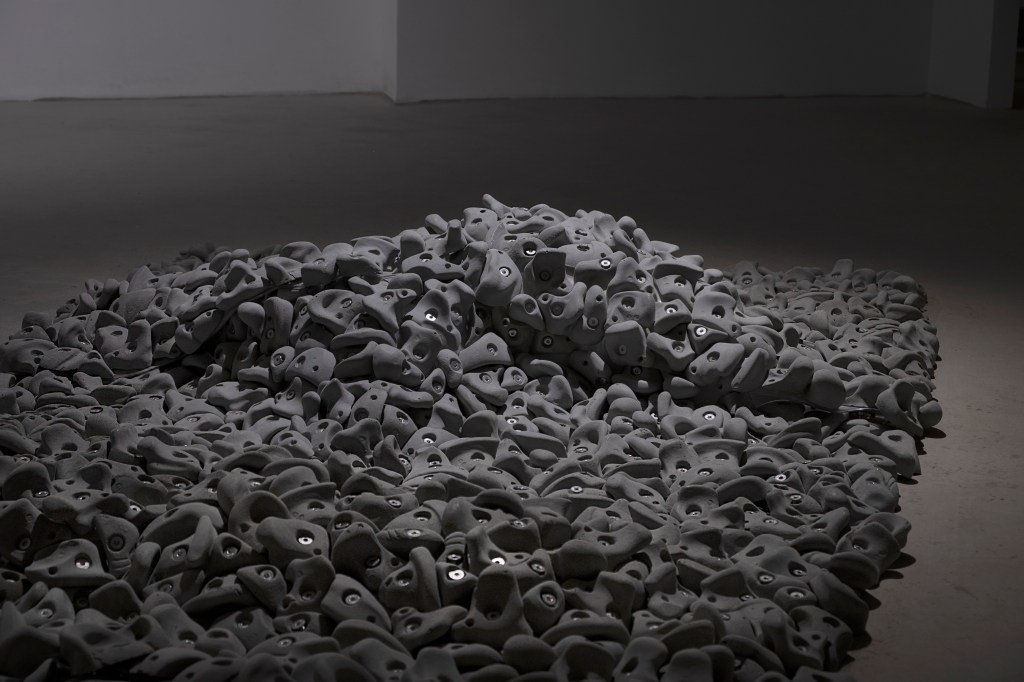
Rocaille
2026
Mixed media, 270×160cm, variable height
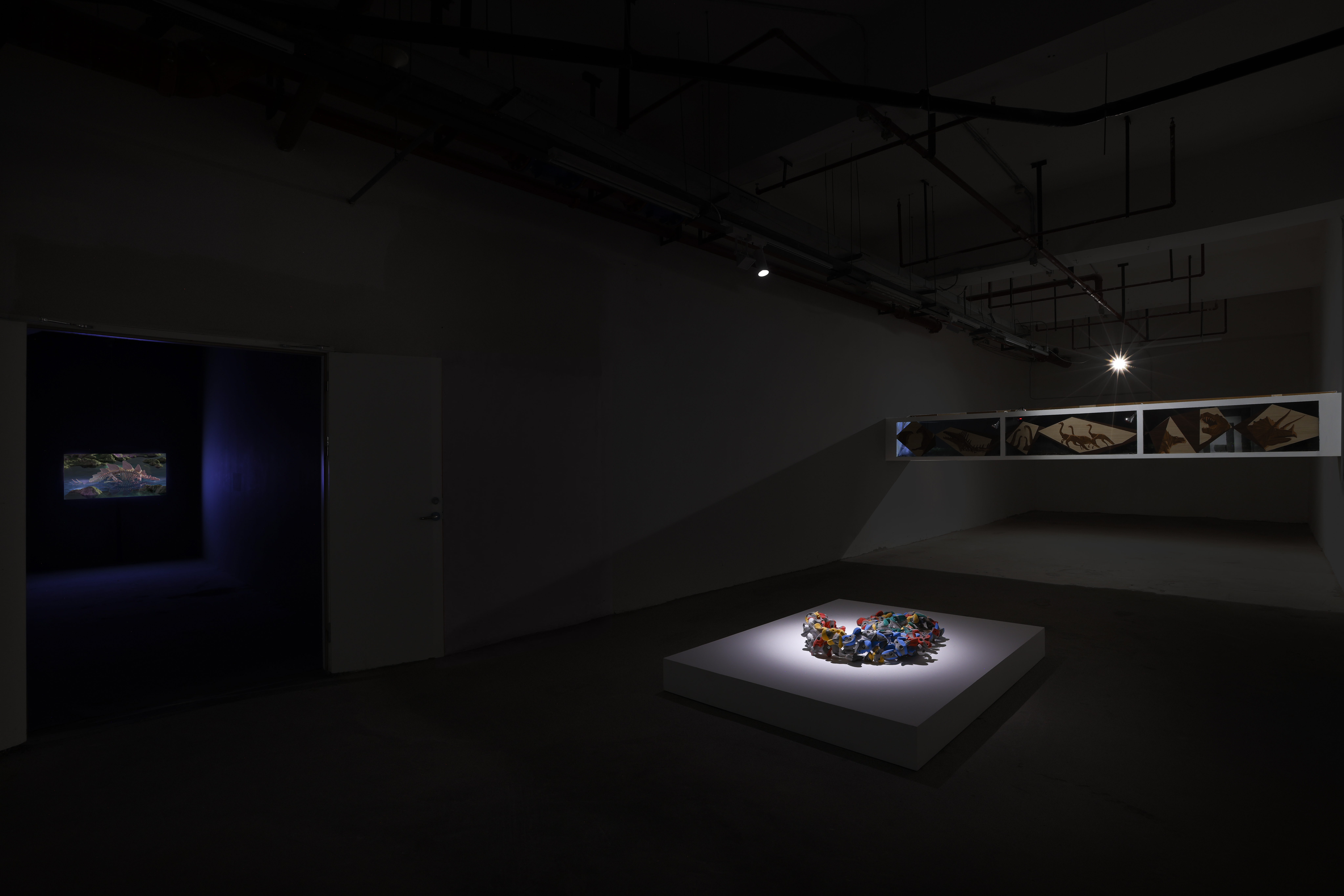
The series Rocaille draws inspiration from Renaissance artificial grottoes and the tradition of rocalle, where real portions of caves- such as stalactites and other rock formations were extracted and dismantled to be recomposed in artificial contexts, often combined with man-made materials like cement, within gardens and noble architectures.concrete, 200 x 175 cm
In a contemporary key, the work uses industrial climbing holds simulacra of rock produced in series-as minimal units of an artificial, anthropocentric landscape. Reduced to the scale of the hand, these forms highlight the human process of domesticating and reinterpreting the natural.
Mounted on on transparent PVC supports, the “rocks” acquire a fluid, adaptable quality, freed from a fixed structure and suggesting a hybrid condition between natural and artificial.
Frieze of the Giant
2026
Wood, mixed media, 174 × 190 cm
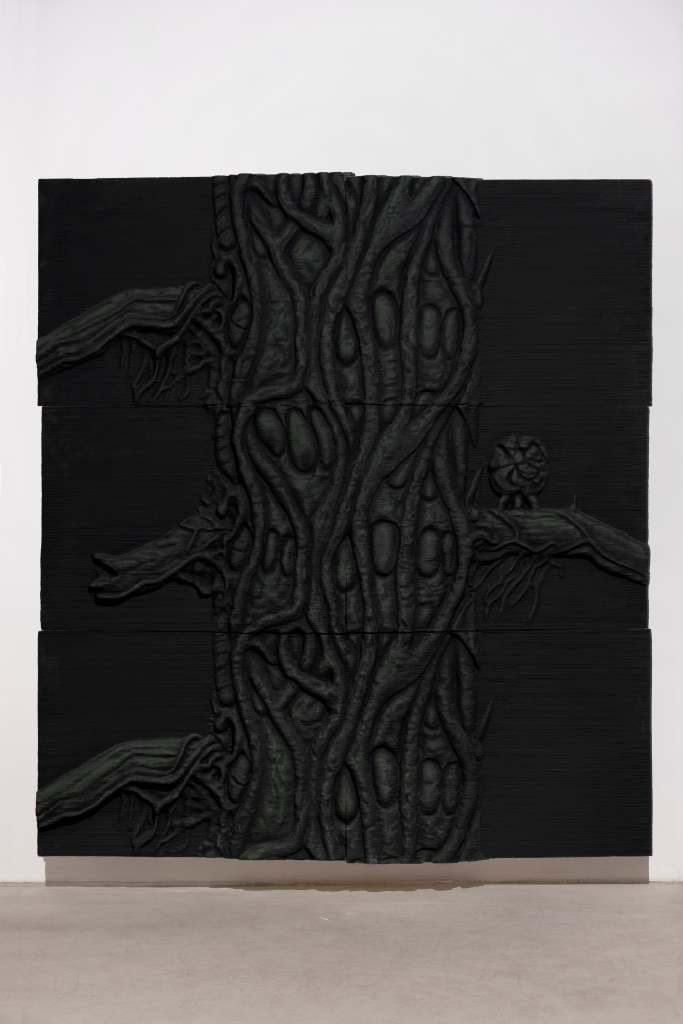
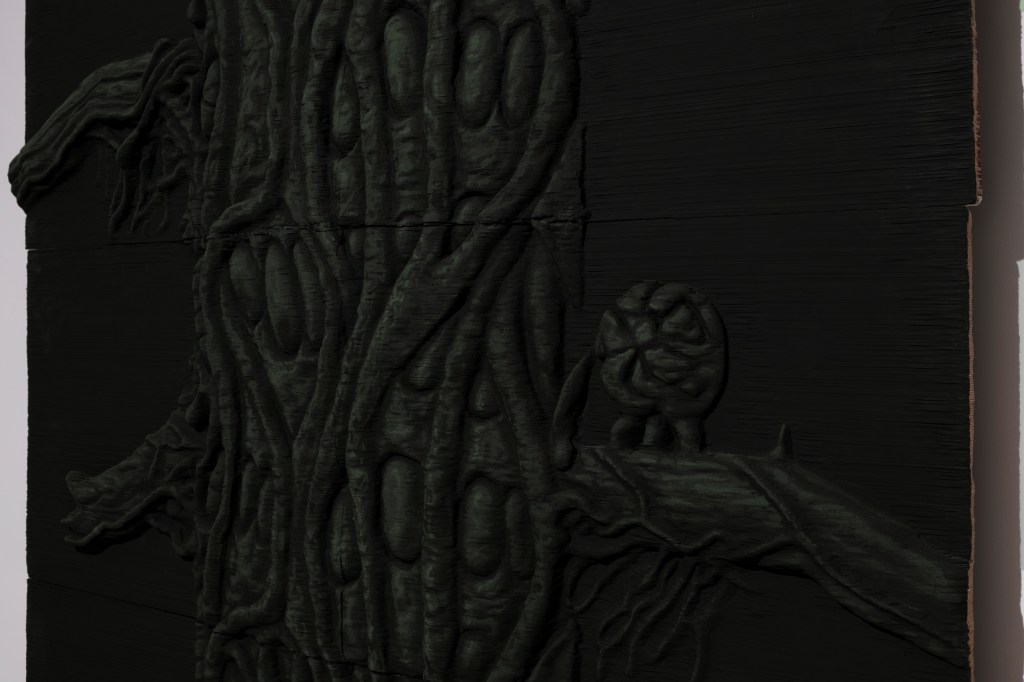
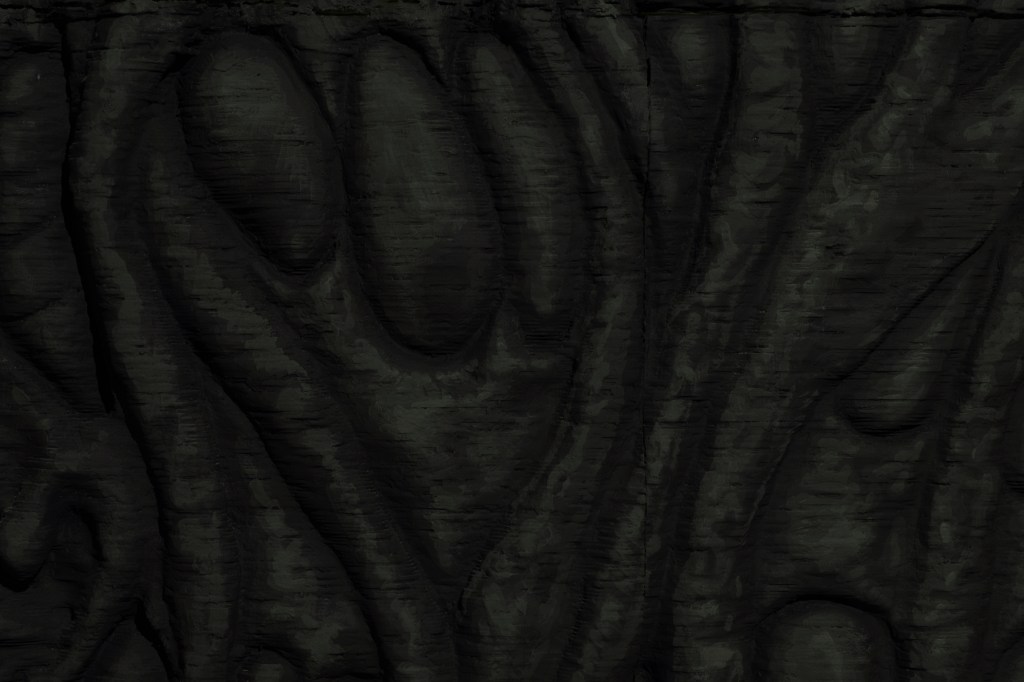
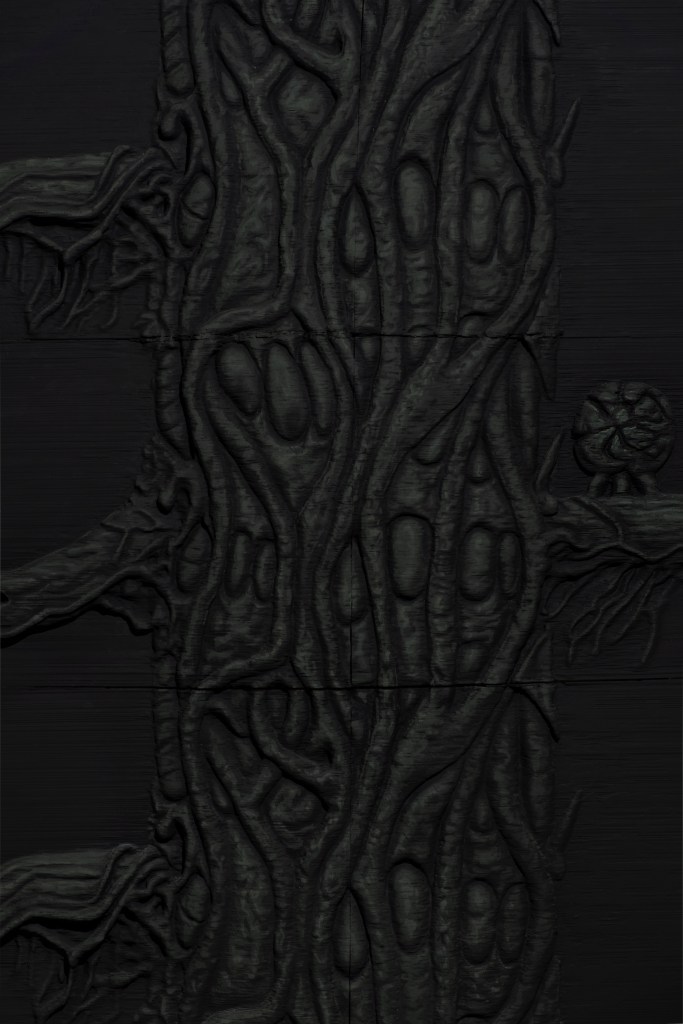
Frieze of the Giant is based on a naturalistic element taken from the 1992 video game Wolfchild (Core Design). The original digital imagery was hand-modeled, sculpted as a bas-relief, and 3D-scanned to create a digital file that could be cut into multiple layers of wood. When reassembled, these layers form the full vertical figure.
The work functions as a vertical frieze with the potential to continue infinitely, painted with matte colors in a synthetic approach, with tones and highlights leaning toward green. This method emphasizes monumentality: the image becomes more legible and impactful when viewed from a distance, reinforcing its presence within a spatial context.
Frieze of the Giant is part of a series of “giant friezes” inspired by a fringe theory suggesting that, in a remote past, the Earth was inhabited by humans of enormous size. The work can be imagined as a decorative frieze for a hypothetical dwelling of these giants, reflecting an interest in preexisting imaginaries of colossal beings, mountains perceived as giant tree trunks, and other fantastical readings of the natural world.
The series also engages with pre-ecological imaginaries. Wolfchild, like many other video games and cultural references, anticipates visual and narrative motifs that predate contemporary crises.
Flashback
2026
Print on concrete and raw clay, 45 × 35 cm
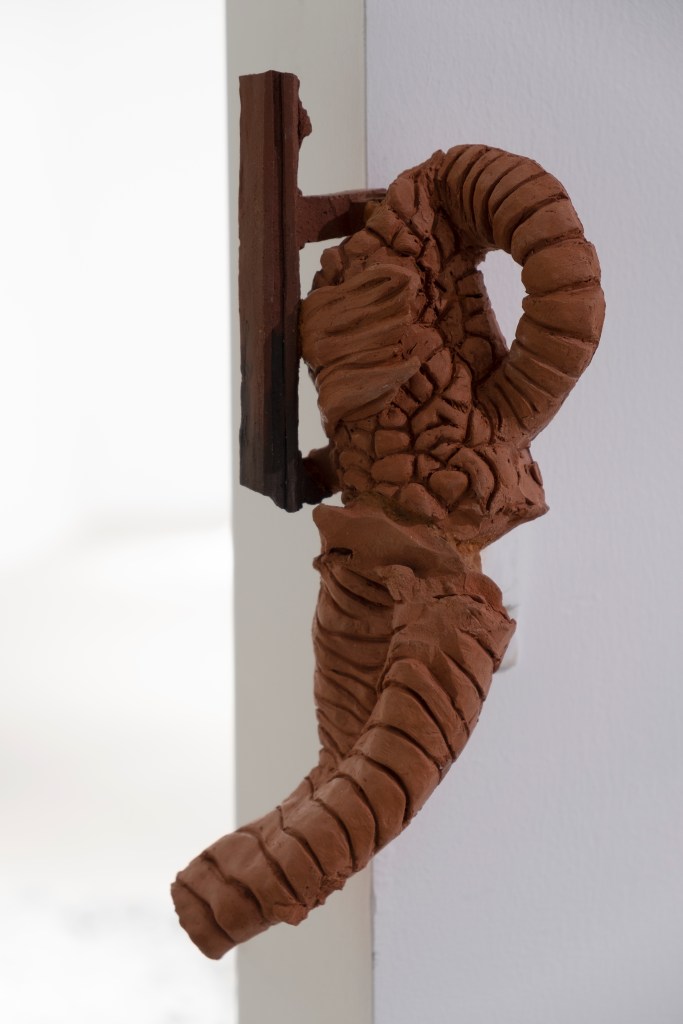
Flashback
2026
Terracotta, different sizes
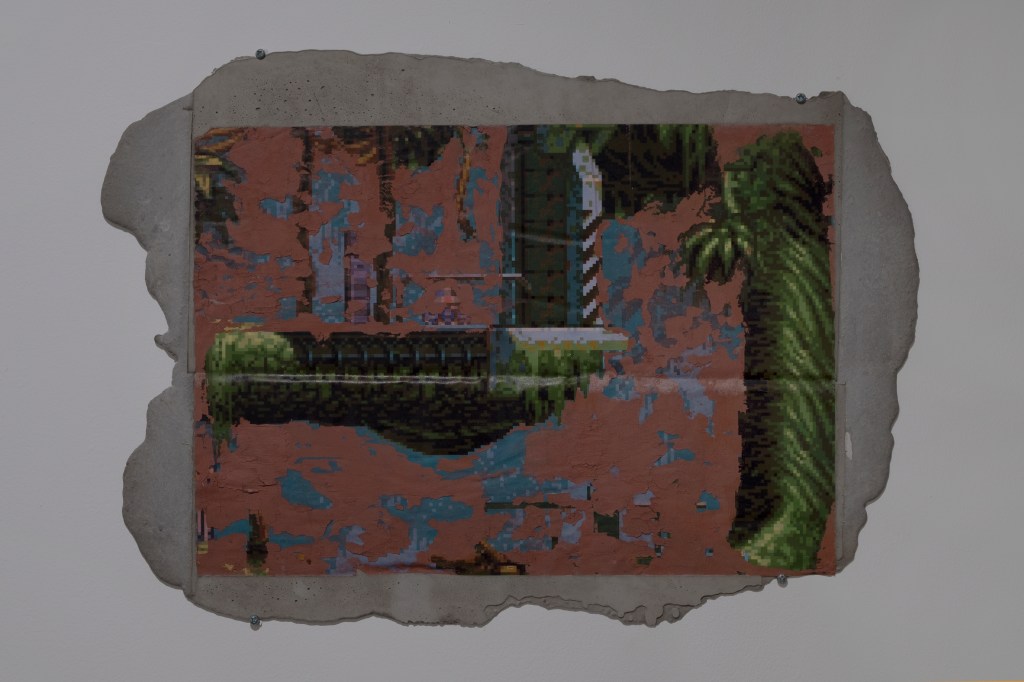
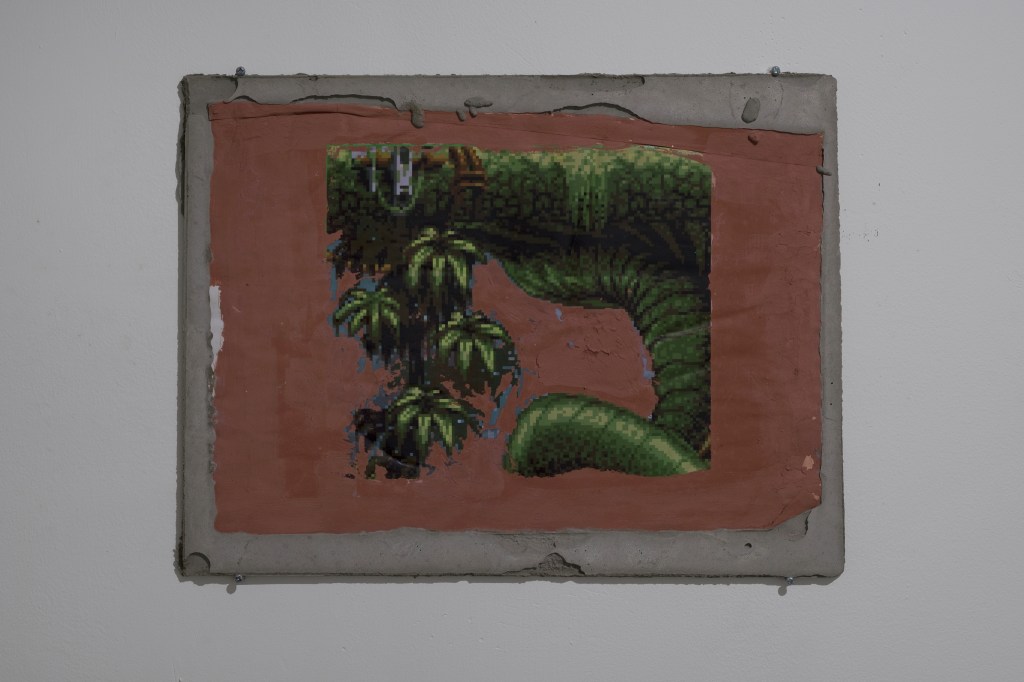
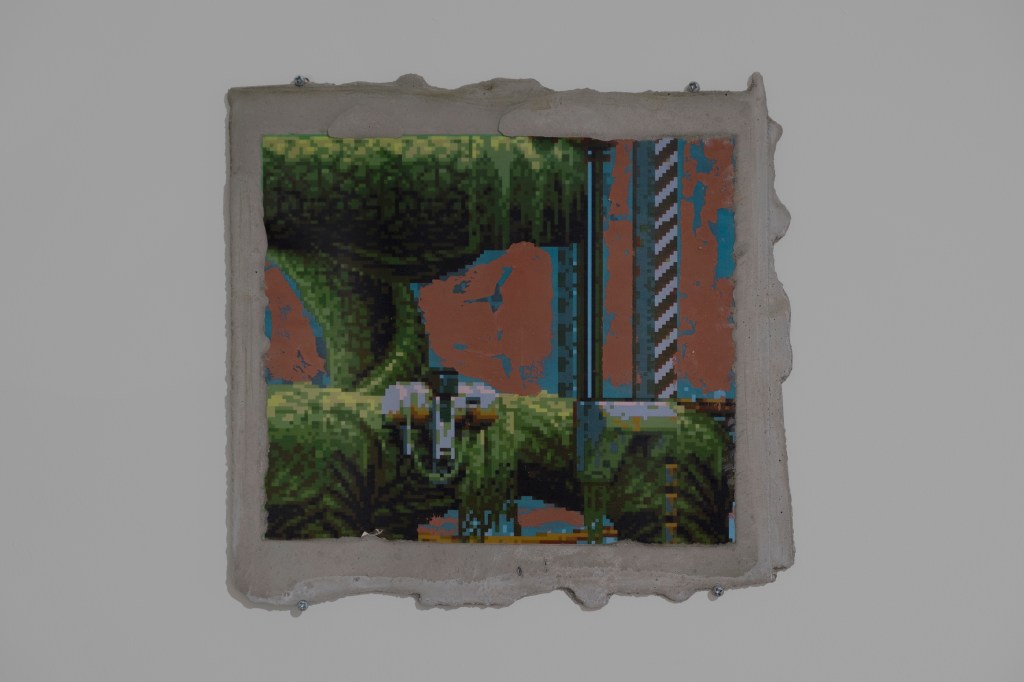
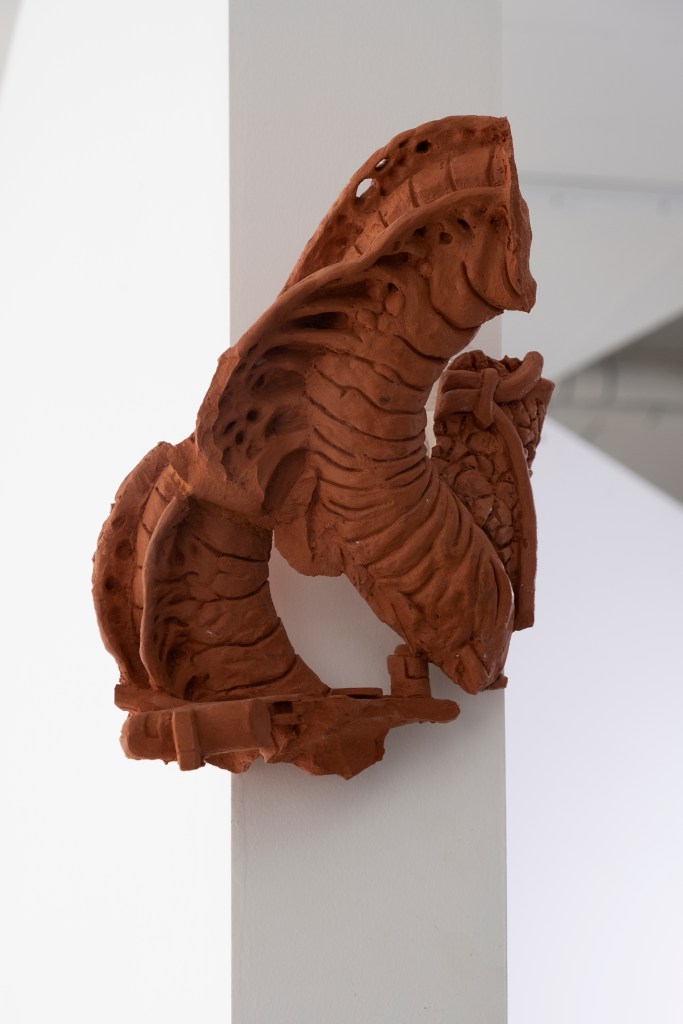
Flashback is a series in which the artist reproduces the backgrounds of the 1992 video game Flashback (Delphine Software) as terracotta sculptures. In this exhibition, however, the works presented are prints — color prints on paper mounted on concrete — serving as preparatory studies for these sculptures.
The prints incorporate interventions in raw terracotta and also include reassembled and reimagined fragments from the original terracotta pieces, allowing the elements that broke during sculpting or firing to be reused creatively.
This approach enables viewers to trace the origins of the sculptural works, revealing both the compositional development and the transformation from digital game imagery to three-dimensional terracotta forms. The prints thus function as both preparatory drawings and autonomous objects, highlighting the dialogue between digital source material, sculptural experimentation, and material reinvention.

